The Inaugural Seattle Street Food Festival
2013
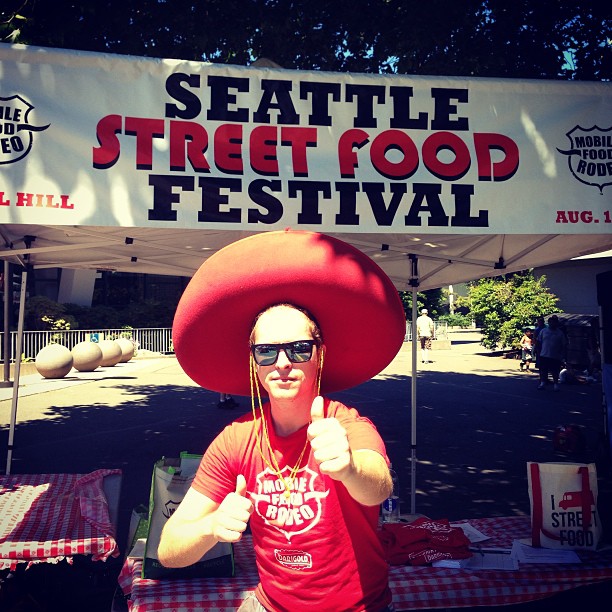
This was the official website for the inaugural Seattle Street Food Festival, slated for August 10,2013 in Cal Anderson Park, Seattle, Wa.
Content is from the site's 2013 archived pages.
The current website for the Seattle Street Food Festival is: www.seattlestfoodfest.com/
1635 11th Ave
Seattle, Washington 98109
Snack@mobilefoodrodeo.com
Saturday, August 10th
5PM - 11PM
PRESS RELEASE
The inaugural Seattle Street Food Festival, slated for August 10 in Cal Anderson Park, has an official lineup, and more details about how exactly things will go down at this massive congregation of trucks, carts, booths, and other up-and-coming food outfits—plus plenty of well-known chefs and restaurants.
Organizer Ryan Reiter, also the guy behind the Mobile Food Rodeo food truck gatherings, says the idea is to embrace all kinds of street food, from little booths like Beanfish, which makes taiyaki at the Fremont market, to heavy hitters like the snappily outfitted Barking Frog Mobile Kitchen. Reiter is still adding vendors, and says that brick-and-mortar joints like Li’l Woody’s, Stumbling Goat, Po Dog, Thai Curry Simple, and Marination will also have booths or be involved in some way. Keep an eye on the website as this evolves.
The massive lineup listed below will be on hand from 5 to 11pm, creating a night market ambience as the sun goes down. Admission is free (duh, you pay for the food you buy), though starting June 30 you can get a priority line ticket for $35, or $65 premiere pass that lets you skip lines all day long.
Then there’s the popup picnic portion of the evening, which runs from 7 to 10. Organizer One Night Only has recruited 12 chefs (final roster forthcoming but it already includes Joshua Henderson and Matthew Lewis) for an event that’s part picnic, part showdown. Each chef will make a street food-inspired dish and ticketholders can wander around this enclosed area, sampling them all and partaking of unlimited drinks. Judges will dole out awards for best in show, best signature dish, and most innovative. Just 250 tickets are available; they’re on sale here June 28 for $125 in advance, and $165 after July 11.
After the picnic, Ethan Stowell and Jason Franey are hosting an industry party until 2am. Hosted beer and cocktails will flow, and whole pigs will be roasted. Space is limited, so the first 100 people who buy tickets to the popup picnic will get an invite to attend and details on its whereabouts.
Check out the website on June 28 for more details and lineup updates. Reiter hopes to expand the festival to two days in 2014. Meanwhile, here is the street food that has been confirmed thus far.
#####
Update 2021:
I have fond memories of the 2013 Seattle Street Food Festival. I was a senior in high school and was in love. The love of my life ( at the time), Lydia Jordan was really into all sorts of food. Her father was a chef, so it didn't seem to strange. In order to impress her with my own appreciation of food I took her to the inaugural gathering of more than 50 trucks, carts, stands, and other vendors that was the 1st Seattle Street Food Festival.
Jump to 2021. I now live in Melbourne Australia working at the Arts Centre Melbourne, a performing arts complex and the National Gallery of Victoria with its Australian and indigenous art. Well actually I am working at home since the city is in lock down AGAIN, due to the Covid 19 pandemic. I thought it was bad enough when we emerged from an almost 3 month lockdown in 2020 and actually thought that with the availabilty of vaccines in 2021 there would be no more lock down. Aside from work I, like a lot of other Aussies, have been playing pokies and other casino games. Every Thursday I go to another website that is an affilate for a number of Australian friendly casinos to check out the upcoming weekly promotionals. If you live in Australia click to see the page on their site. I enjoy playing pokies since it doesn't entail a lot of stress like playing video poker. I have my favorite pokie games but always am eager to try new games as they are introduced by the various gaming software companies.
Lydia and I parted ways as we headed off to different colleges, met our eventual spouses after college, yet stayed in touch as good friends. We try to meet at least once a year in NYC at an interesting restaurant she picks out when I visit the US on business. Obviously with the pandemic still making travel difficult, particularly in and out of Australia with its seroius travel restrictions, we missed getting together in 2020 and 2021 also seems like it might not happen at least in person. Instead, we did a virtual restaurant get together this past spring when I was able to snag a reservation at Anchovy which is probably the hottest restaurant in Melbourne right now, and she at Eleven Madison Park in NYC just after they changed their menu to all vegetarian. It was weird and fun as we discussed the foods we ordered and how we would rate each dish.
I don't know, in hind sight, if I would have become such a foodie, if it were not for Lydia and our 2013 Seattle Street Food Festival date. Maybe if would have happened anyway, but I like to think it was that first Seattle Street Food Festival that made the difference.
BTW: NEWS regarding the 2021 Festival Updates from their ciurrent website at www.seattlestfoodfest.com/
Due to Covid-19 in Washington State and in accordance with Governor Inslee, the Mobile Food Rodeo, organizers of the Seattle Street Food Festival have postponed our 2021 festival plans until further notice.
#####
Participate
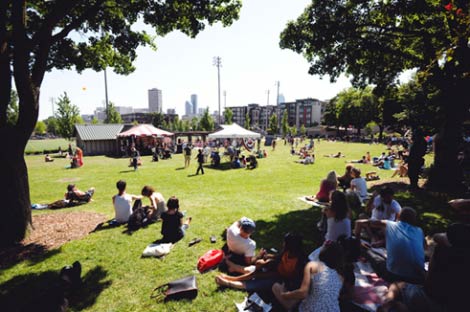
The Mobile Food Rodeo Hosted Over 30,000 People in Fremont
Welcome to the 1st Annual Seattle Street Food Festival! Seattle’s premier street food festival produced by the Mobile Food Rodeo showcasing the best local street food in the Northwest.
Last year, the Mobile Food Rodeo attracted over 30,000 people with 45 food trucks in beautiful downtown South Lake Union and Fremont in 2012 in just two days, so we are excited to be moving to a two day festival.
In just one year, the Mobile Food Rodeo is the largest truck festival in the United States has received press by some of Seattle’s top publication and media outlets, bloggers and food critics in attendance at our three festivals
The Seattle Street Food Festival offers local operators bring big crowds and hungry tummies directly to their door step to experience your curbside cuisine.
VENDOR APPLICATION NOW BEING ACCEPTED. Interested in vending this year at the Seattle Street Food Festival? Email us at snack (@) mobilefoodrodeo.com or fill out our inquiry form below. Thanks for your interest and see you this August!
12 Amazing Chefs Pop-Up For Charity in the Park | Line-up Announced
July 24, 2013 by mobilefoodrodeo
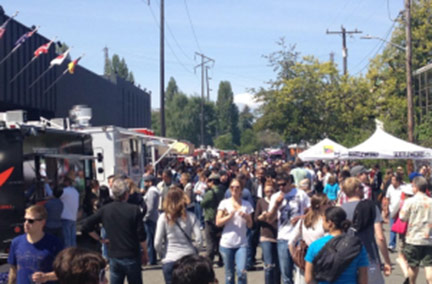
The Seattle Street Food Festival, the mighty inaugural gathering of more than 50 trucks, carts, stands, and other vendors, is three weeks away. And while the list of participating street good folk grows ever mightier, organizers have released more specifics on the event’s other component: the popup picnic.
In short, the picnic is a separate, ticketed component of the event, and a collaboration between the festival and local high-end popup outfitthe One Night Only Project. Roughly a dozen notable chefs from around town (generally of the brick-and-mortar variety) will be preparing their own take on street food and serving it up as night falls in Cal Anderson Park. $165 ticket gets you in to sample plates like Charles Walpole’s ceviche with watermelon and toasted grains, or Joshua Henderson’s Southeast Asian-inspired crispy wings and chicken feet (!) with toasted garlic, spicy fermented cabbage with cilantro, and nuoc cham. Plus, you know, a lot of wine and beer and mingle with the chefs.
PURCHASE TICKETS NOW
On the agenda for the popup picnic:
Charles Walpole, Blind Pig Bistro
Mike Easton, Il Corvo
Jason Stoneburner, Stoneburner and Bastille
Matthew Lewis, Where Ya At Matt and Roux
Manu Alfau, of the forthcoming La Bodega
Wiley Frank, Little Uncle
Carrie Mashaney, Spinasse chef, incoming Aragona doyenne, and Rising Star at large
Kim Mahar, RN74 pastry maven
Maxime Bilet, Modernist Cuisine coauthor
Brian Clevenger, Tavolata,
Kevin Burzell, Kedai Makan
Joshua Henderson, Skillet, Westward, Hollywood Tavern, Huxley Wallace et al.
Attendees and judges, including behatted chef Thierry Rautureau, will vote for the best dishes (categories are best signature dish, most creative, and most innovative). The winning chefs get a portion of ticket proceeds (as much as $15,000 in total) to donate to their favorite charities.
And even better, anyone who purchases a ticket also get the lowdown on how to attend the industry after party—a pig roast thrown by Ethan Stowell and Jason Franey at a private location that runs into the wee hours of the night with no admission for those invited.
The popup picnic ticket also gets you line-skipping privileges at the festival, know as the VIF (Very Important Foodie). The Seattle Street Food Festival runs from 5 to 11 in Cal Anderson Park and the picnic happens from 7 to 10.
SSFF 2013 | OFFICIAL 50 + FOOD LINE-UP
July 18, 2013 · by mobilefoodrodeo
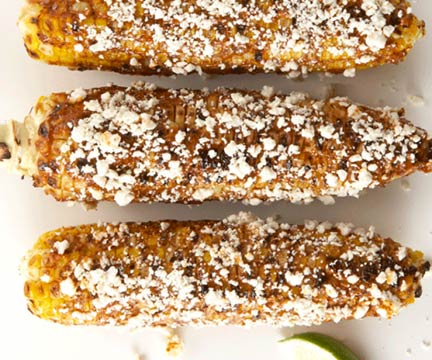
We are thrilled to announce our full roster of tasty street food vendors for our 1st ever Seattle Street Food Festival hosted in and around Cal Anderson Park on August 10th. Be it a food truck fan or an avid food forager among the locally abundant farmers markets throughout the city, you will find an amazing selection of locally produced and inspired plates to keep you fed all day long this year. This year’s selection includes a variety of favorite food trucks showcased at our annual Mobile Food Rodeo from Where ya At Matt, Ezell’s Express, Narwhal, Barking Frog and the irresistible gooey goodness that is Monte Cristo.
As far as carts and booths, we offer some of Seattle’s favorite local Capitol Hill haunts like Lil’ Woody’s Po Dog, Deluxe and Poquitos will be servi9ng up their own culinary creations curbside for the masses! Plus some of Seattle’s top farmers market finds like Bean Fish- Japanese Taiyaki, Mi Ranchitos Mexican Corn, Shave Ice, and so much more.
We plan to announce the participating food vendors (3) SSFF Menu items on August 1st and will be printed in our walking guide that is free at the event to find your favorite foods. Remember each food vendor will have one (1) $5 sampler plate to enjoy, allowing you to eat your way through the festival all day long.
This event is free to the general public. Stay tuned for updates on our Facebookand on Twitter fan pages.
ROLL WITH JEN | POP-UP CHEF SPOTLIGHT: RN74 + LITTLE UNCLE
July 24, 2013 · by mobilefoodrodeo
Seattle’s 1st annual pop-up picnic is all about people enjoying street food made from some of Seattle’s finest chefs at a summer outdoor evening picnic. If that doesn’t appeal to you, give me your address so I can deliver you a punch in the face.
On August 10th, One Night Only entertainment gurus Julien Perry and Melissa Peterman (in collaboration with Seattle’s first Street Food Festival) will be rounding up 12 of Seattle’s most beloved chefs to dish out street food-inspired fare. The pop-up picnic will go down in a fenced-off area of Cal Andersen Park, where chefs will compete for the titles of Best Signature Dish, Most Innovative and Best In Show (presentation). The proceeds go to the winning chef’s charity of choice.
A ticket gets you a fun spot for the evening picnic (bring a blanket if you want; the event will also be equipped with patio heaters and some tables/chairs), 12 signature street food tastes, and complimentary booze.
Here is a sneak preview of the dishes Wiley Frank/Poncharee Kounpungchart’s (PK) of Little Uncle and Kim Mahar of RN74 have in store for the event.
Wiley Frank/Poncharee Kounpungchart’s (PK), Co-owners of Little Uncle.
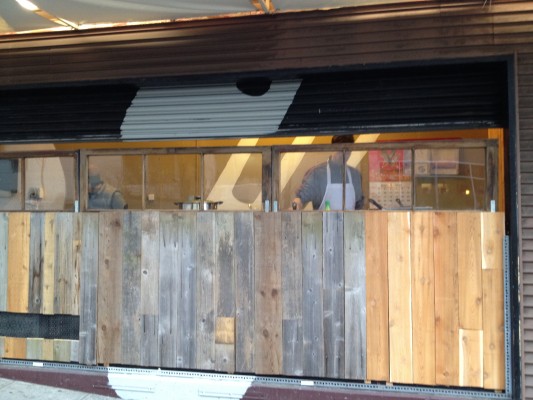
PK and Wiley at their Madison location
Why I love Little Uncle: When I am not eating yellow curry Dungeness crab, gluten free and vegetarian pad thai, and other delights at Little Uncle, I am thinking about eating at Little Uncle. I have been tracking Wiley and PK’s Thai eatery since their pop-up days at La Bete. You can find the duo splitting their time between their beloved take out on Madison Avenue and their beautiful new digs in Pioneer Square.
img title="littleuncle__crab" alt="" src="https://web.archive.org/web/20130806071827im_/http://rollwithjen.com/wp-content/uploads/2013/07/littleuncle__crab-546x400.jpg" width="546" height="400">
Their street food-inspired dish: “We are making an ice lolly with a flavor and garnish to be determined. We have a very cool lolly maker that will go toe to toe with any old thermal immersion circulator.”
Little Uncle’s charity: Green Plate Special - “They do good work and it is right there for everyone to see.”
The one dish Wiley/PK think people should try at Little Uncle: “Khao mun gai (Hainanese chicken rice). It is very simple and some people don’t get it, but it is a dish that has nothing to hide and it warms our heart.” [Roll with Jen's note: If you try Little Uncle's chicken rice and still don't get it, punch yourself two times in the face]
Why Little Uncle is going to kick arse: “Food tastes better when it is on a stick.”
Kim Mahar, Executive Pastry Chef of RN74.
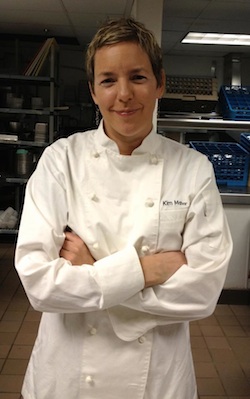
Photo courtesy of Julien Perry
Why I love RN74: People who love wine and beautifully-crafted meals flock to RN74. I head to Seattle’s Michael Mina outpost because I love both of those things AND dessert. At RN74, dessert is not an afterthought. Sweet treats such as the steamed lemon pudding and hand-cut beignets hold their own amongst the steak tartare, lobster pie, and savory favorites.
Kim Mahar’s street food-inspired dish: “Bacon fat popcorn, griddled corn bread custard, WA stone fruits, lardon sprinkles, plus other street food snacks to grab on the fly. I’m going for a killer mix of sweet meets savory. Recipe testing is fully underway!”
RN74′s charity: ”The No Kid Hungry campaign for the Share Our Strength Foundation. The Mina Group has been working very closely with this foundation for years to help raise money for this important issue. Last year, the Mina Group sent me to Washington DC for an event on Capitol Hill to raise money and awareness for this foundation. I have been an avid supporter ever since.”
Dessert at RN74 people should try: ”The crème brulee with popcorn ice cream, pretzel streusel and curried peanuts. I came up with this dessert when we hosted a beer dinner with the Pike Brewery. The flavors and textures are a knockout. Must try!”
Why I am going to kick arse: ”My team and I are really going to spend a lot of energy on the development of this dish. The greatest goal is to see people taking their first bite with an “Oh my God!” expression on their faces. Plus, I have an exceptionally talented team in the RN74 kitchen to help me make this dish a serious contender among all this talent. It’s guaranteed to be a BIG night!”
Ticket proceeds (which can total tens of thousands of dollars) are donated to causes chosen by the participating chefs, ranging from child hunger prevention to urban farming initiatives.
Notable Chef Participants in the Pop-Up Picnic:
-
Charles Walpole (Blind Pig Bistro)
-
Mike Easton (Il Corvo)
-
Jason Stoneburner (Stoneburner & Bastille)
-
Matthew Lewis (Where Ya At Matt & Roux)
-
Wiley Frank & Poncharee Kounpungchart (Little Uncle)
-
Carrie Mashaney (Spinasse)
-
Kim Mahar (RN74)
-
Maxime Bilet (Modernist Cuisine)
-
Brian Clevenger (Tavolata)
-
Joshua Henderson (Skillet, Westward, and more)
Dishes have ranged from crispy Southeast Asian–inspired chicken wings to bacon-fat popcorn with cornbread custard, creating an experimental and interactive culinary adventure.
The Festival Atmosphere
The Seattle Street Food Festival embraces the night market vibe — food vendors operate under glowing string lights, musicians and performers entertain along the streets, and crowds mingle over diverse dishes. With its urban outdoor setting and summer timing, the festival creates a completely different energy than traditional indoor food events.
Ticketing is structured to keep the event accessible:
-
General Admission: Free.
-
Line-Skipping Pass: Paid upgrade for those seeking shorter waits.
-
Pop-Up Picnic Tickets: Premium experience including food, drinks, and charitable giving.

More Background On SeaStreetFoodFest.com
SeaStreetFoodFest.com occupies an interesting place in Seattle’s culinary history. The domain was the official online home of the inaugural Seattle Street Food Festival, an ambitious 2013 event created to bring together food trucks, carts, market vendors, independent restaurants, established chefs, craft vendors, and food enthusiasts in a large outdoor celebration of Seattle street food.
The first Seattle Street Food Festival was held on August 10, 2013, in and around Cal Anderson Park on Seattle’s Capitol Hill. Contemporary coverage shows that the event was conceived as something considerably broader than a conventional food-truck gathering. Organizer Ryan Reiter wanted to showcase the many different ways street food reached Seattle diners—from trucks and carts to farmers-market stands, restaurant pop-ups, and experimental dishes from some of the city’s best-known chefs.
SeaStreetFoodFest.com promoted that first festival, published vendor and chef lineups, explained ticketing and special events, recruited vendors, and served as an information hub as the event took shape. The surviving site identifies itself specifically as the official website of the inaugural 2013 festival. The supplied historical material likewise places the original event at Cal Anderson Park on August 10, 2013, from 5 p.m. to 11 p.m.
What began there ultimately grew into a recurring Seattle food event. By 2019, the Seattle Street Food Festival was celebrating its seventh year, demonstrating that the experiment represented by SeaStreetFoodFest.com had developed well beyond its one-night origins.
Ownership, Organization, and Ryan Reiter
The organization behind the Seattle Street Food Festival was Mobile Food Rodeo, the Seattle food-truck event producer that preceded the festival. Ryan Reiter was the central figure behind both.
Reiter already had experience producing large food-truck gatherings. Mobile Food Rodeo had developed a substantial following before the Seattle Street Food Festival was created. Eater reported that the 2012 Fremont Mobile Food Rodeo drew approximately 17,000 people, giving the organizers evidence that Seattle had a strong appetite for large-scale mobile-food events.
Reiter also came from a family connected to Seattle's market culture. Contemporary coverage described his family as operating the Fremont Sunday Market. This connection helps explain why the eventual festival concept went beyond trucks. It incorporated aspects of a public market, night market, restaurant showcase, craft fair, and neighborhood street festival.
The distinction mattered. When the festival was first being developed, Reiter repeatedly emphasized that street food was much larger than the food-truck phenomenon. His objective was to include carts, booths, restaurants, emerging chefs, farmers-market businesses, and other small-scale culinary entrepreneurs. Seattle Met summarized the philosophy neatly in early 2013: there was "a lot more to street food than just food trucks."
That philosophy became one of the defining characteristics of SeaStreetFoodFest.com and the festival it represented.
How the Festival Developed
The original concept changed substantially between its announcement and opening night.
In January 2013, plans called for the Seattle Street Food Festival to take place August 17–18, apparently in Fremont. The organizers envisioned a two-day event that would allow Mobile Food Rodeo to evolve into a broader festival.
Early concepts were remarkably ambitious. Plans discussed food trucks, carts, restaurant booths, local breweries, smaller $5 dishes, pop-up dining and even a Grilled Cheese Grand Prix. Organizers were already thinking about one of the practical problems inherent in food festivals: visitors wanted to sample several vendors rather than stand in line for one full meal.
By April, however, the event had changed location, date and duration. It would be held August 10 at Cal Anderson Park and would be a one-day event rather than the initially envisioned two-day festival.
The move proved important. Capitol Hill provided an energetic urban setting with established restaurants, nightlife, pedestrian activity, independent businesses and a population already receptive to experimental food and cultural events.
The festival ultimately occupied 11th Avenue adjacent to Cal Anderson Park. Capitol Hill Seattle described the first event as taking place along 11th Avenue and documented the large crowd that descended on the neighborhood.
Cal Anderson Park and the Capitol Hill Setting
Cal Anderson Park was more than a convenient patch of open space. Its location helped give the inaugural Seattle Street Food Festival its character.
The park sits in the heart of Capitol Hill, one of Seattle's best-known dining, nightlife and cultural districts. The festival's use of the streets surrounding the park effectively transformed an existing neighborhood into a temporary outdoor food district.
Contemporary promotion described the event as a night market rather than simply a food festival. One early description advertised "50 Food Vendors. 40 Urban Crafters. 10 Pop-Ups. 2 Beer Gardens" surrounding Cal Anderson Park.
That combination is crucial to understanding the event. Visitors were not being asked simply to line up at a row of trucks. The organizers were attempting to recreate the density, variety and social atmosphere associated with street-food markets found in cities around the world.
The late-afternoon and evening schedule reinforced the concept. As daylight faded, food, drink, shopping, chefs and crowds combined to create the atmosphere of an urban night market.
More Than 50 Food Vendors
Food variety was the centerpiece.
When the final lineup was announced in July 2013, Eater Seattle counted 53 food vendors consisting of trucks, carts and booths.
The roster demonstrated just how broadly the organizers defined street food. Participants included Barking Frog Mobile Kitchen, Ezell's, Nosh, Now Make Me A Sandwich, Trophy Cupcakes, Where Ya At Matt, Narwhal, Dumpling Tzar, Beanfish Taiyaki, Stumbling Goat, Poquitos, Po-Dog and Li'l Woody's, among many others. Beer gardens added another component.
Capitol Hill Seattle's advance coverage provides an even better sense of the diversity. Gourmet trucks included vendors offering falafel, crepes, sandwiches and other portable foods. Booths and stands included Beanfish's Japanese taiyaki, Mi Ranchito's Mexican corn, Indian food, Indonesian food, arepas, doughnuts and sweets. Local restaurants and chefs were represented alongside these mobile businesses.
This was an unusually inclusive interpretation of street food for an American food festival of the period. Instead of treating trucks as the attraction, the event treated the entire spectrum of informal and portable dining as the attraction.
The $5 Sampler Concept
One of the smartest ideas behind the festival was the sampler.
Organizers encouraged vendors to offer a $5 tasting-size item. The strategy addressed a fundamental problem with large food events: a visitor who buys one or two restaurant-size meals quickly becomes too full to explore the rest of the festival.
Smaller portions allowed attendees to construct their own tasting menu by moving from vendor to vendor. That supported discovery while potentially distributing business among more participating operators.
It also supported one of the festival's larger goals—introducing Seattle residents to businesses and cuisines they might not otherwise encounter.
The model helped turn the festival into a culinary exploration rather than merely a collection of places to buy dinner.
The Pop-Up Picnic and Seattle's Restaurant Chefs
SeaStreetFoodFest.com also promoted a much more exclusive experience within the free public festival: the Pop-Up Picnic.
Produced in collaboration with the One Night Only Project, the picnic brought roughly a dozen notable Seattle chefs into a fenced area of Cal Anderson Park. Each was challenged to reinterpret street food in his or her own way.
Participants included Charles Walpole of Blind Pig Bistro, Mike Easton of Il Corvo, Jason Stoneburner, Matthew Lewis of Where Ya At Matt and Roux, Manu Alfau, Wiley Frank of Little Uncle, Carrie Mashaney of Spinasse, RN74 pastry chef Kim Mahar, Maxime Bilet of Modernist Cuisine, Brian Clevenger of Tavolata, Kevin Burzell of Kedai Makan and Joshua Henderson.
The resulting dishes could be considerably more experimental than ordinary festival fare. Seattle Met highlighted examples such as Walpole's ceviche with watermelon and toasted grains and Henderson's Southeast Asian-influenced crispy wings and chicken feet with fermented cabbage, garlic, cilantro and nuoc cham.
This created an intriguing reversal. Established restaurant chefs were borrowing the format and informality of street food while actual street-food entrepreneurs operated just outside.
Awards and the Charity Component
The Pop-Up Picnic also functioned as a culinary competition.
Attendees and judges—including noted Seattle chef Thierry Rautureau—were to vote on dishes in categories such as Best Signature Dish, Most Creative/Innovative and Best in Show or presentation, depending on how the categories were described in contemporary promotional material.
These were event competition honors rather than major outside culinary awards, an important distinction when discussing the festival's "awards."
More significantly, the competition incorporated charitable giving. Winning chefs could direct a share of ticket proceeds to charities they supported, with Seattle Met reporting that as much as $15,000 could be distributed.
That gave the premium event a civic dimension beyond food and entertainment.
Free Admission and Premium Experiences
Accessibility was central to the festival's design.
General admission was free. Visitors paid individually for whatever food they wanted. That meant someone could experience the atmosphere without purchasing an expensive admission ticket.
At the same time, organizers experimented with premium tiers. Eater reported a $35 priority pass and a $65 premiere pass intended to reduce waiting.
The separate Pop-Up Picnic was considerably more expensive. Advance information described a limited-capacity event with food from the participating chefs, drinks and special access. Seattle Met reported a $125 advance price rising to $165 after July 11, with only 250 tickets available.
The first 100 picnic purchasers were also offered access to information about a private industry after-party featuring a pig roast hosted by Ethan Stowell and Jason Franey.
Thus one event simultaneously served casual visitors, serious food enthusiasts and members of Seattle's restaurant community.
Popularity—and the Problem of Being Too Popular
Perhaps the strongest evidence of the inaugural festival's success came after it opened.
Capitol Hill Seattle reported that the August 10 event "definitely drew a crowd," describing 11th Avenue as packed and noting substantial lines.
The crowding became one of the defining stories of the first year. When organizers prepared the second festival in 2014, they openly acknowledged that 2013 had been a test of the concept—and a major success. Reiter told Capitol Hill Seattle that moving to two days should reduce congestion and create a better festival experience.
The publication characterized the inaugural festival as "a bit of a victim of its own success": large crowds overwhelmed the limited street space and produced long lines during the relatively short event.
This is a more useful measure of the festival's popularity than an unsupported attendance estimate. Contemporary reporting clearly establishes that demand exceeded what the initial configuration comfortably accommodated.
Reviews and Public Reaction
Contemporary reactions were enthusiastic about the food selection but more mixed about logistics.
Local reporting praised the caliber and variety of vendors while repeatedly mentioning crowds and lines. Capitol Hill Seattle described the inaugural event as featuring some of the city's best street-food and street-food-inspired providers, while also documenting how tightly packed the event became.
The important point is that the primary criticism was largely a consequence of success: too many people were trying to sample too much food in too little space and time.
Organizers responded rather than ignoring the problem. The following year's festival expanded from one day to two and explicitly promoted the prospect of shorter lines.
That adaptation provides evidence that the inaugural event was genuinely experimental. SeaStreetFoodFest.com documents not a polished long-established festival, but the first iteration of a concept that organizers were still learning how to operate at scale.
Press and Media Coverage
The festival received substantial attention from Seattle's food and neighborhood press even before its debut.
Eater Seattle followed the project from its January announcement through changes in date and location, the vendor lineup and the final approach to opening day.
Seattle Met covered the concept, interviewed Reiter, previewed the vendors and devoted separate coverage to the Pop-Up Picnic.
Capitol Hill Seattle documented the festival from a neighborhood perspective, including the vendor roster, Reiter's broader plans for Capitol Hill and photographs and observations from opening night.
That volume of advance coverage indicates that the event mattered beyond the food-truck community. It intersected with several stories unfolding in Seattle at the time: the rapid rise of mobile dining, the popularity of farmers markets, the emergence of chef-driven casual food, Capitol Hill's cultural development and increasing public interest in internationally influenced street cuisine.
Growth After SeaStreetFoodFest.com's Inaugural Festival
The best measure of the first festival's impact is what happened next.
The Seattle Street Food Festival returned to Cal Anderson Park in 2014. This time it expanded to Friday and Saturday and incorporated an Urban Craft Uprising shopping component. The explicit objective was to preserve the excitement of 2013 while relieving its congestion.
By 2015, the festival had outgrown Capitol Hill and moved to South Lake Union. Eater described the third annual edition as having more than 75 food stands, while Seattle Met explained that the larger South Lake Union site was chosen to provide additional room for vendors and pedestrian traffic.
Seattle Magazine described the 2015 edition as Seattle's largest independent street-food festival and noted that Urban Craft Uprising brought more than 100 handmade craft vendors into the experience.
The concept continued evolving. By 2019, official festival information described a five-block event in South Lake Union, and a longtime attendee reviewing that year's festival called it the seventh year and noted more than 100 food options.
The geographic progression—Cal Anderson Park to a larger South Lake Union footprint—illustrates how dramatically the event evolved from the experiment promoted on SeaStreetFoodFest.com.
Audience and Appeal
The festival's structure naturally attracted several overlapping audiences.
Food enthusiasts were the obvious core group, particularly people interested in discovering vendors outside conventional restaurants. Food trucks had already developed a strong following in Seattle, while farmers markets supplied another community accustomed to buying directly from small producers.
Capitol Hill residents and other Seattle locals could attend casually because admission was free. Restaurant enthusiasts had reasons to come for participating chefs and established businesses. Visitors interested in international food could encounter Thai, Japanese, Mexican, Indonesian, Indian, Middle Eastern, Latin American and other culinary traditions in a compact setting.
The Pop-Up Picnic targeted a more dedicated culinary audience willing to pay substantially for access to prominent chefs, while the after-party extended the festival's reach into the restaurant industry itself.
Craft vendors and later partnerships with Urban Craft Uprising expanded the audience still further.
In effect, the Seattle Street Food Festival connected several communities that ordinarily operated separately: restaurants, food trucks, farmers-market vendors, pop-up chefs, craftspeople, neighborhood residents, tourists and culinary professionals.
Cultural and Social Significance
SeaStreetFoodFest.com is historically interesting because the festival captured a particular moment in American urban food culture.
Food trucks were becoming mainstream, but the Seattle Street Food Festival argued that mobile food was merely one part of a much older tradition. Reiter explicitly framed street food as something with deep international roots rather than a temporary restaurant trend.
That approach had practical cultural consequences. Putting taiyaki, Mexican street corn, falafel, dumplings, Thai food, Indonesian dishes, restaurant burgers, Southern cooking, desserts and chef-driven experimental dishes into the same event implicitly presented Seattle's culinary identity as diverse and constantly evolving.
The festival also reduced barriers between established restaurants and tiny independent operators. A small market booth could participate in the same event as prominent chefs and recognizable Seattle restaurant brands.
For emerging businesses, that kind of exposure was valuable. Thousands of potential customers could discover a vendor in one evening without the vendor needing a permanent storefront.
The festival therefore functioned simultaneously as entertainment, small-business promotion, culinary experimentation and public cultural exchange.
What SeaStreetFoodFest.com Represents Today
SeaStreetFoodFest.com should be understood primarily as a historical record of the Seattle Street Food Festival's beginnings rather than as the definitive website for every subsequent version of the event.
The surviving site explicitly explains that it was the official website for the inaugural 2013 Seattle Street Food Festival and that its material comes from the site's archived 2013 pages.
That makes the domain valuable as a snapshot of the festival before anyone knew whether the idea would work.
The pages preserve vendor announcements, chef profiles, ticket information, event plans and the promotional language used to explain a new kind of Seattle food gathering. They reveal an event consciously attempting to move beyond the standard food-truck festival and create something closer to a large urban night market.
Later history demonstrated that the concept had staying power. The second year expanded to two days. The third moved to larger quarters. Subsequent editions continued in South Lake Union, and by 2019 the festival was in its seventh year.
Seen from that perspective, SeaStreetFoodFest.com documents the starting point of a Seattle institution in the making: a crowded August evening beside Cal Anderson Park where more than 50 vendors, prominent chefs, small entrepreneurs and thousands of hungry visitors demonstrated that Seattle could support a major festival devoted not simply to food trucks, but to street food as a culture.